Ingredients
- 2.5 cups of milk
- 1 egg yolk
- 1/2 cup of granulated sugar
- 2 tablespoons of wheat starch
- 1 tablespoon of ground almonds
- 2 tablespoons of coconut
Preparation
- Pour 2.5 cups of milk into a deep pot. Add a little more than half a cup of granulated sugar and 2 tablespoons of wheat starch. Finally, add 1 tablespoon of ground almonds and 1 egg yolk. Whisk all the ingredients together thoroughly.
- Then, place the pudding on the stove and cook over medium heat, stirring constantly. Once the mixture comes to a boil, add 2 tablespoons of shredded coconut and let it boil for a little while longer.
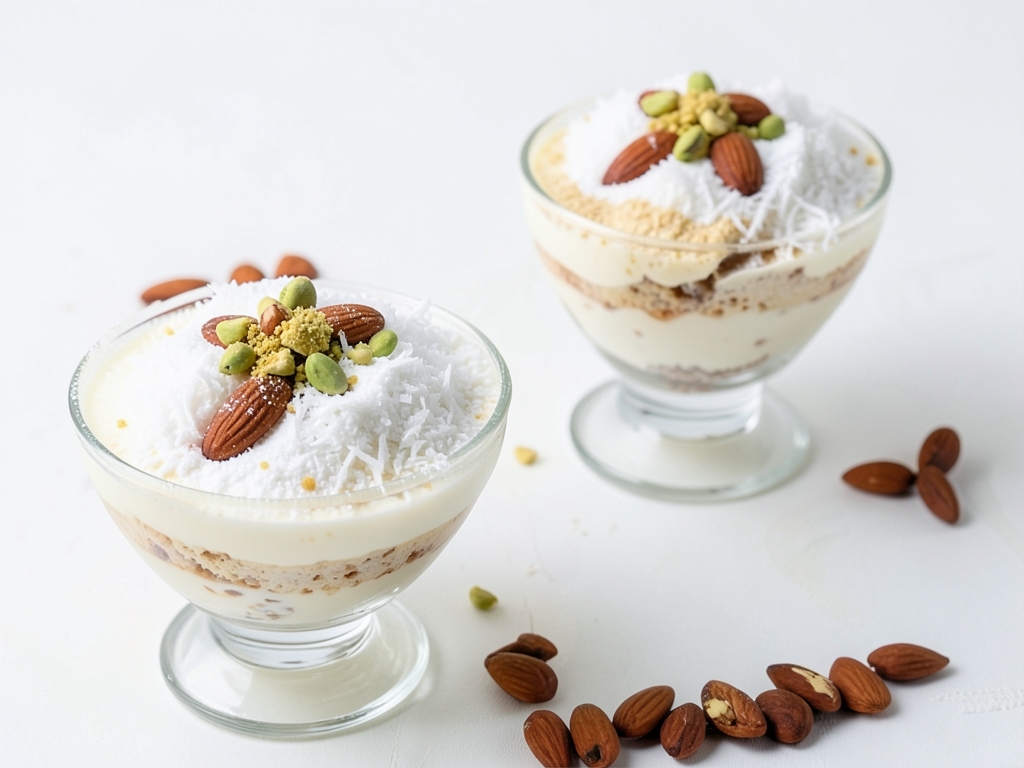
- Once the almond keşkül (keşkül-ü fukara) is cooked, remove it from the heat and divide it among serving bowls while still hot.
- Once the almond keşkül (keşkül-ü fukara) has cooled slightly, garnish the top with ground green pistachios and almonds. Then, let it chill in the refrigerator before serving.
- Fukara Keşkül is a high-calorie, milk-based dessert that was distributed to the poor in the soup kitchens of the Kanuni era because it is filling and keeps one feeling full. “Keşkül,” meanwhile, refers to the shell obtained by hollowing out a coconut. The story of this dessert, which holds an important place in Ottoman cuisine, serves as a lesson for today’s leaders.
- Ottoman judges and dervishes, who placed great importance on justice and the well-being of the people, would mingle with the public at certain times and beg for alms. The money they collected, along with these keşküls, would accumulate. In this way, they observed the people’s circumstances and understood their hardships. Both the keşküll and the money collected were donated to soup kitchens and distributed as food to the poor. The fact that the dessert was served in these containers led to it being named as such.
Comments and Reviews
Please sign in to comment.
Comments
No comments yet. Be the first to comment!
Recipe Details
- Category: Dessert
- Difficulty: Medium
- Preparation: 0 min
- Cooking: 0 min
- Servings: 4
- Published: 26.08.2026
Recipe Images
Recipe Author

Ece Eren
12 recipes